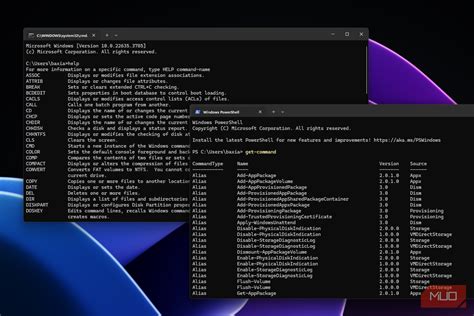
When using the Command Prompt, you may find yourself hitting roadblocks due to inefficient processes, lack of customization, or simply not knowing the full range of commands and functions available. This guide aims to solve these common pain points, offering step-by-step guidance and practical examples to enhance your Command Prompt experience.
Let’s dive right in to address your primary needs: making the Command Prompt faster, more efficient, and tailored to your workflow.
Getting Started: Quick Reference Guide
Quick Reference
- Immediate action item: Change the Command Prompt color to improve readability - right-click on the title bar, select "Properties," then choose your desired color scheme.
- Essential tip: Use the `cd` command to navigate to directories efficiently. For example, `cd C:\Users\YourUsername\Documents` to move to your documents folder.
- Common mistake to avoid: Forgetting to use the `/K` switch in batch files to keep the prompt open after execution. Instead of `start /b myscript.bat`, use `start /b /K myscript.bat`.
How to Customize Command Prompt Appearance
One of the best ways to improve your experience in the Command Prompt is by customizing its appearance to suit your needs. Follow these steps:
1. Right-click on the title bar of the Command Prompt window.
2. Select "Properties" from the context menu.
3. Navigate to the "Options" tab to adjust settings like buffer size which can help if you’re dealing with a lot of output.
4. Go to the "Colors" tab to change the text and background colors.
- Choose a text color that contrasts well with your background for better readability.
- Consider using darker colors or grayscale for a less harsh, yet still clear display.
This simple tweak can significantly enhance your comfort and efficiency when working in the Command Prompt.
Efficient Navigation and File Management
Navigating directories and managing files quickly is crucial when using the Command Prompt. Here’s how to get it done right:
1. Use the `cd` command to change directories.
Example:
To change to the Documents folder: `cd C:\Users\YourUsername\Documents`.
2. Utilize tab completion to save time:
- Start typing a directory name and press `Tab` to auto-complete it.
- Press `Tab` twice for a list of possible completions.
3. Use `dir` to list directory contents:
Example:
To list the contents of the current directory, type: `dir`.
4. Move files and directories:
- To move files: `move source_file destination_folder`.
- To move directories: `move /D source_folder destination_folder`.
5. Delete files and directories:
- To delete files: `del file_name`.
- To delete directories (empty): `rmdir folder_name`.
6. Batch file handling:
Create scripts for repetitive tasks. For instance, a simple script to navigate and list contents could be:
`echo off`
`cd C:\Users\YourUsername\Documents`
`dir`
Save this as `list.bat` and run it by typing `list.bat`.
Advanced Command Prompt Techniques
Once you’re comfortable with basic commands, it’s time to explore more advanced techniques to boost your productivity:
1. Environment Variables:
- To view all environment variables: `set`.
- To set an environment variable temporarily: `set VAR_NAME=value`.
- To make changes persistent across sessions, use the "System Properties" -> "Environment Variables" menu.
2. Redirection and Piping:
Redirect output to a file:
Example:
`dir > output.txt`
This saves the directory listing to `output.txt`.
Use pipes to chain commands:
Example:
`dir | find /i "filename.txt"`
This filters out a specific file name from the directory listing.
3. Use Batch Files Efficiently:
Combine commands into one batch file and use the `/K` switch to keep the window open after execution:
Example script:
`@echo off`
`cd C:\Users\YourUsername\Documents`
`dir /B > files.txt`
`notepad files.txt`
Save this as `list_and_view.bat` and run it by typing `list_and_view.bat`. This command lists files in the directory to a text file and then opens that file in Notepad.
Troubleshooting Common Issues
Even with all the useful commands, you may encounter problems. Here’s how to troubleshoot common issues:
1. Command not found:
Ensure that the path to the executable is included in your environment variables. If not, add it:
1. Open "System Properties" -> "Advanced" -> "Environment Variables".
2. Find the “Path” variable in the "System variables" section.
3. Edit it to include the path of your executable, for example: `C:\Program Files\MyApp`.
2. Permission denied:
Sometimes you might not have the required permissions to run certain commands:
1. Run Command Prompt as an administrator:
- Right-click the Command Prompt icon and select "Run as administrator".
Practical FAQ
How can I quickly find a file using the Command Prompt?
To quickly find a file using the Command Prompt, use the `where` command:
Example:
To find all `.txt` files: `where /R. *.txt`.
This command recursively searches through your current directory and all subdirectories for files matching the specified pattern.
How do I schedule tasks with the Command Prompt?
Scheduling tasks with the Command Prompt involves using the `schtasks` command:
Example:
To create a task that runs `myscript.bat` every day at 7 AM:
`schtasks /create /tn "MyTask" /tr "C:\path\to\myscript.bat" /sc daily /st 07:00`.
You can then manage and view your scheduled tasks with the `schtasks /query` command.
By following these steps, tips, and best practices, you’ll be able to customize, navigate, and utilize the Command Prompt in ways that save you time and enhance productivity. Whether you’re managing files, automating tasks, or troubleshooting, the Command Prompt is a powerful tool when used correctly.